
 EN
EN
 English
 Client
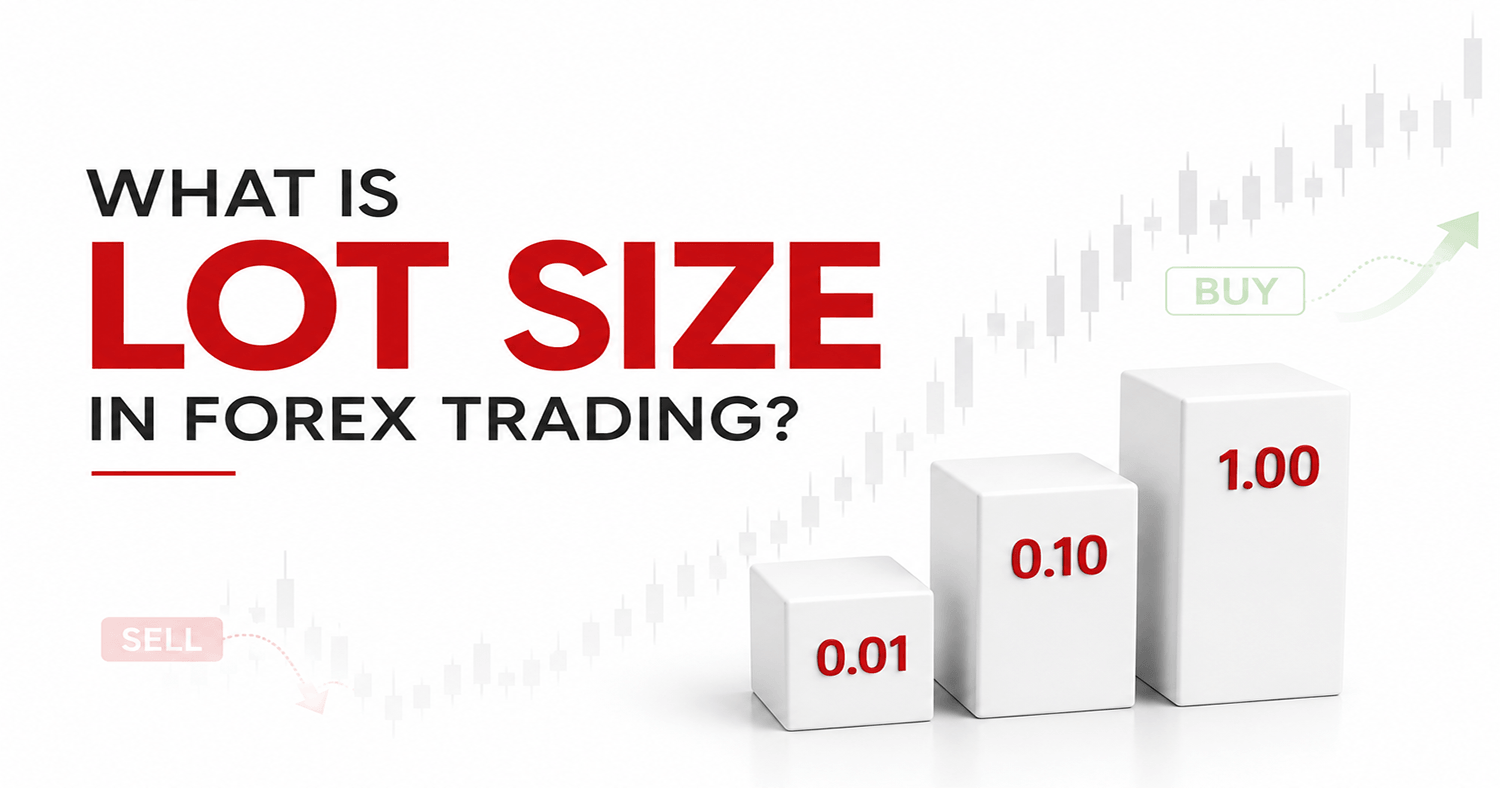
Lot Size in Forex Explained in Brief
Lot size in forex refers to the volume or size of a trade. It tells you how many units of a currency pair you are buying or selling in the forex market.
In simple words, lot size decides how big or small your trade is. A larger lot size means each pip movement can create a bigger profit or loss. A smaller lot size means each pip movement has a smaller impact on your trading account.
For beginners, understanding lot size is important because it directly affects risk, margin, pip value, and position sizing. Before opening a forex trade, traders should know how much they may gain or lose if the market moves in their favor or against them.
To learn more about forex market basics, traders can visit Zed Capital’s forex trading page.
Key Takeaways
Lot size in forex means the trade volume or number of currency units in a position.
A standard lot usually represents 100,000 units of the base currency.
A mini lot usually represents 10,000 units.
A micro lot usually represents 1,000 units.
A nano lot usually represents 100 units, depending on broker availability.
Bigger lot sizes create bigger profit and loss movement.
Lot size affects pip value, margin requirement, and total trading risk.
Beginners should choose lot size based on account size, stop-loss distance, and risk tolerance.
Lot size should never be selected randomly or emotionally.
Before trading, beginners should review the broker’s risk disclosure.
Introduction
Forex trading looks simple from the outside: choose a currency pair, decide whether to buy or sell, and place a trade. But behind every trade, there is one important decision that can strongly affect the result: lot size.
Many beginners focus only on entry price, take-profit, and stop-loss. However, lot size is just as important because it controls how much money is gained or lost for every pip movement.
For example, a 20-pip move may be small on the chart. But depending on the lot size, that same 20-pip move can mean a small gain, a large gain, a controlled loss, or a dangerous account drawdown.
That is why understanding lot size in forex is one of the first steps toward responsible trading. It helps traders manage risk, calculate position size, avoid overexposure, and trade with more discipline.
In this guide, we will explain what lot size means, how standard, mini, micro, and nano lots work, how lot size affects pip value, and how beginners can choose a suitable lot size based on risk management.
What Is Lot Size in Forex Trading?
Lot size in forex trading is the number of currency units you trade in a forex position.
Forex is traded in currency pairs such as EUR/USD, GBP/USD, USD/JPY, AUD/USD, and USD/CHF. When you open a position, you are trading a specific quantity of the base currency. This quantity is called the lot size.
For example:
If you trade EUR/USD, the euro is the base currency and the U.S. dollar is the quote currency. If you open one standard lot of EUR/USD, you are trading 100,000 units of EUR.
The lot size determines the size of your market exposure. It also affects how much each pip movement is worth.
A higher lot size means higher exposure. A lower lot size means lower exposure.
Why Lot Size Matters in Forex Trading
Lot size matters because it directly affects your trading risk.
A trader may have a good market analysis, but if the lot size is too big, even a small market movement can create a large loss. On the other hand, if the lot size is properly calculated, the trader can control risk more professionally.
Lot size affects:
Pip value
Profit potential
Loss potential
Margin requirement
Account drawdown
Emotional pressure
Risk per trade
This is why professional traders do not choose lot size randomly. They calculate it based on account size, risk percentage, stop-loss distance, and market conditions.
Types of Lot Sizes in Forex
There are four common lot sizes in forex trading:
| Lot Type | Currency Units | Common Name |
| Standard Lot | 100,000 units | 1.00 lot |
| Mini Lot | 10,000 units | 0.10 lot |
| Micro Lot | 1,000 units | 0.01 lot |
| Nano Lot | 100 units | 0.001 lot |
Not every broker offers nano lots, but standard, mini, and micro lots are widely used in forex trading.
What Is a Standard Lot?
A standard lot is equal to 100,000 units of the base currency.
In trading platform terms, a standard lot is usually written as:
1.00 lot
Example:
If you trade 1.00 lot of EUR/USD, you are trading 100,000 units of EUR.
For many major currency pairs where USD is the quote currency, the approximate pip value of one standard lot is around $10 per pip.
This means:
10 pips = approximately $100
20 pips = approximately $200
50 pips = approximately $500
A standard lot can create large profit or loss movement, so it may not be suitable for beginners with small accounts.
What Is a Mini Lot?
A mini lot is equal to 10,000 units of the base currency.
In trading platform terms, a mini lot is usually written as:
0.10 lot
Example:
If you trade 0.10 lot of EUR/USD, you are trading 10,000 units of EUR.
For many major currency pairs where USD is the quote currency, the approximate pip value of one mini lot is around $1 per pip.
This means:
10 pips = approximately $10
20 pips = approximately $20
50 pips = approximately $50
Mini lots are smaller than standard lots, but beginners still need to manage risk carefully.
What Is a Micro Lot?
A micro lot is equal to 1,000 units of the base currency.
In trading platform terms, a micro lot is usually written as:
0.01 lot
Example:
If you trade 0.01 lot of EUR/USD, you are trading 1,000 units of EUR.
For many major currency pairs where USD is the quote currency, the approximate pip value of one micro lot is around $0.10 per pip.
This means:
10 pips = approximately $1
20 pips = approximately $2
50 pips = approximately $5
Micro lots are often preferred by beginners because they allow traders to practice with smaller exposure.
What Is a Nano Lot?
A nano lot is equal to 100 units of the base currency.
In trading platform terms, a nano lot may be written as:
0.001 lot
Not all brokers offer nano lots. When available, nano lots allow very small position sizes and may be useful for learning or testing strategies with minimal exposure.
However, even with small lot sizes, traders should still follow proper risk management.
0.01 Lot Size Explained
A 0.01 lot size is also called a micro lot.
It usually represents 1,000 units of the base currency.
For many USD-quoted major currency pairs, 0.01 lot is approximately equal to $0.10 per pip.
Example:
If you trade EUR/USD with 0.01 lot and the price moves 30 pips:
30 pips × $0.10 = $3
So, a 30-pip movement may create approximately $3 profit or loss, depending on trade direction.
This is why 0.01 lot is commonly used by beginners who want to keep their risk small while learning how the forex market works.
0.10 Lot Size Explained
A 0.10 lot size is also called a mini lot.
It usually represents 10,000 units of the base currency.
For many USD-quoted major currency pairs, 0.10 lot is approximately equal to $1 per pip.
Example:
If you trade EUR/USD with 0.10 lot and the price moves 30 pips:
30 pips × $1 = $30
So, a 30-pip movement may create approximately $30 profit or loss.
A 0.10 lot size may look small, but for a small account, it can still be risky if the stop-loss is wide or if multiple trades are opened at the same time.
1.00 Lot Size Explained
A 1.00 lot size is called a standard lot.
It usually represents 100,000 units of the base currency.
For many USD-quoted major currency pairs, 1.00 lot is approximately equal to $10 per pip.
Example:
If you trade EUR/USD with 1.00 lot and the price moves 30 pips:
30 pips × $10 = $300
So, a 30-pip movement may create approximately $300 profit or loss.
Standard lots are usually more suitable for experienced traders or larger accounts because the risk can increase quickly.
Lot Size and Pip Value
Lot size and pip value are directly connected.
A pip is a small unit of price movement in forex. For most currency pairs, one pip is usually the fourth decimal place. For JPY pairs, one pip is usually the second decimal place.
The larger the lot size, the larger the pip value.
| Lot Size | Units | Approx. Pip Value on Many USD-Quoted Pairs |
| 1.00 lot | 100,000 | $10 per pip |
| 0.10 lot | 10,000 | $1 per pip |
| 0.01 lot | 1,000 | $0.10 per pip |
| 0.001 lot | 100 | $0.01 per pip |
These values are approximate and can vary depending on the currency pair, account currency, and exchange rate.
For accurate planning, traders can use a profit calculator or other trading tools before placing a trade.
Lot Size and Profit
Lot size affects how much profit a trader can make when the market moves in the right direction.
Example:
A trader buys EUR/USD and the market moves 50 pips in profit.
| Lot Size | Approx. Pip Value | 50-Pip Profit |
| 0.01 lot | $0.10 per pip | $5 |
| 0.10 lot | $1 per pip | $50 |
| 1.00 lot | $10 per pip | $500 |
This shows why lot size can increase profit potential.
However, the same logic applies to losses.
Lot Size and Loss
If the market moves against the trader, lot size will also affect the size of the loss.
Example:
A trader buys EUR/USD and the market moves 50 pips against the position.
| Lot Size | Approx. Pip Value | 50-Pip Loss |
| 0.01 lot | $0.10 per pip | $5 |
| 0.10 lot | $1 per pip | $50 |
| 1.00 lot | $10 per pip | $500 |
This is why bigger lot size is not always better.
A trader should choose lot size based on risk management, not emotion or profit expectation.
Lot Size and Margin
Lot size also affects margin requirement.
When you open a forex trade, the broker may lock a portion of your account as margin. The larger the lot size, the larger the position value, and usually the higher the margin requirement.
For example:
A 1.00 lot trade has a much larger position value than a 0.01 lot trade. This means it usually requires more margin and creates higher exposure.
Margin requirements may vary depending on:
Currency pair
Account type
Leverage
Broker conditions
Market volatility
Regulatory rules
Before trading, traders should understand how margin works and review the broker’s risk disclosure. The CFTC also warns that retail forex uses margin and that leverage can amplify both gains and losses. CFTC Forex Advisory
Lot Size and Leverage
Leverage allows traders to control a larger position with smaller capital. Lot size decides how large that position is.
For example, if a trader uses high leverage and also selects a large lot size, the account risk can increase quickly.
Leverage may reduce the margin needed to open a trade, but it does not reduce the real market exposure of the position.
That means a trader can still lose money quickly if the market moves against a large position.
Beginners should not use high leverage as a reason to open oversized trades. Lot size should always be selected based on risk, not only available margin.
Lot Size and Stop-Loss
Lot size and stop-loss should always be planned together.
A stop-loss defines how many pips you are willing to risk. Lot size defines how much money each pip is worth.
Together, they decide your total risk.
Formula:
Trade Risk = Stop-Loss in Pips × Pip Value
Example:
If your stop-loss is 40 pips and your pip value is $1:
40 × $1 = $40 risk
If your stop-loss is 40 pips and your pip value is $10:
40 × $10 = $400 risk
Same stop-loss. Different lot size. Very different risk.
This is why traders should calculate lot size before entering a trade.
How to Choose the Right Lot Size
Choosing the right lot size depends on your account size, risk tolerance, trading strategy, and stop-loss distance.
A beginner-friendly approach is to follow these steps:
Step 1: Decide Your Risk Per Trade
Many traders risk only a small percentage of their account on each trade, such as 1% or 2%.
Example:
If your account is $1,000 and you risk 1%, your maximum risk per trade is:
$1,000 × 1% = $10
Step 2: Decide Your Stop-Loss Distance
Let’s say your stop-loss is 50 pips.
Step 3: Calculate Pip Value
If your maximum risk is $10 and your stop-loss is 50 pips:
$10 ÷ 50 pips = $0.20 per pip
Step 4: Choose Lot Size
If you want to risk around $0.20 per pip, you may need a lot size close to 0.02 lot on many USD-quoted pairs.
This is only an example. Actual pip value may vary depending on the currency pair and account currency.
Lot Size Example for a $1,000 Account
Let’s say a trader has a $1,000 account and wants to risk 1% on one trade.
Maximum risk:
$1,000 × 1% = $10
The trader plans a EUR/USD trade with a 50-pip stop-loss.
Required pip value:
$10 ÷ 50 = $0.20 per pip
Approximate lot size:
0.02 lot
This means if the trade hits the 50-pip stop-loss, the loss may be around $10.
This is a risk-managed approach because the trader calculated lot size based on account risk, not emotion.
Lot Size Example for a $500 Account
Let’s say a trader has a $500 account and wants to risk 1% per trade.
Maximum risk:
$500 × 1% = $5
The trader plans a trade with a 50-pip stop-loss.
Required pip value:
$5 ÷ 50 = $0.10 per pip
Approximate lot size:
0.01 lot
This means a micro lot may be more suitable for this example.
If the trader used 0.10 lot instead, the risk would be much higher and may not match the account size.
Lot Size Example for a $5,000 Account
Let’s say a trader has a $5,000 account and wants to risk 1% per trade.
Maximum risk:
$5,000 × 1% = $50
The trader plans a trade with a 50-pip stop-loss.
Required pip value:
$50 ÷ 50 = $1 per pip
Approximate lot size:
0.10 lot
This example shows how lot size can change based on account size and risk percentage.
A larger account can handle a larger lot size, but risk should still be controlled.
Lot Size in MetaTrader 5
On the MetaTrader 5 trading platform, lot size is usually entered in the “Volume” field when placing a trade.
Common examples:
0.01 = micro lot
0.10 = mini lot
1.00 = standard lot
Before placing a live trade, beginners should double-check the volume field carefully. Entering 1.00 instead of 0.10 can increase exposure significantly.
Traders using MT5 can also monitor balance, equity, margin, free margin, and open profit or loss directly from the platform.
Common Lot Size Mistakes Beginners Make
Mistake 1: Choosing Lot Size Randomly
Many beginners choose a lot size without calculation. This can lead to unexpected losses.
Lot size should be based on risk management, not guesswork.
Mistake 2: Using the Same Lot Size on Every Trade
Different trades may have different stop-loss distances. If the stop-loss is wider, the lot size may need to be smaller.
Using the same lot size every time can create inconsistent risk.
Mistake 3: Increasing Lot Size After a Loss
Some traders increase lot size after losing trades to recover quickly. This is called revenge trading and can be dangerous.
Mistake 4: Ignoring Stop-Loss Distance
A large stop-loss with a large lot size can create a very high risk.
Lot size should always match the stop-loss distance.
Mistake 5: Copying Another Trader’s Lot Size
A lot size suitable for one trader may not be suitable for another. Account size, leverage, risk tolerance, and strategy may be different.
Mistake 6: Confusing Margin With Risk
Just because the platform allows you to open a trade does not mean the trade is safe.
Margin tells you how much is required to open a position. Risk tells you how much you may lose if the trade goes against you.
Lot Size and Risk Management
Lot size is one of the most important parts of forex risk management.
A trader can have a good strategy, but poor lot size management can still damage the account.
Good risk management includes:
Using a suitable lot size
Setting a clear stop-loss
Avoiding overleverage
Risking a small percentage per trade
Avoiding too many open positions
Checking margin level
Reviewing economic news before trading
Using tools for planning
Traders can use Zed Capital’s trading tools and economic calendar to support better trade preparation.
How Economic News Can Affect Lot Size Decisions
Economic news can create fast price movement in forex markets.
Important events include:
Interest rate decisions
Inflation data
Employment reports
Central bank speeches
GDP data
Retail sales reports
Geopolitical events
During high-impact news, spreads may widen and price movement may become unpredictable. Because of this, traders may reduce lot size, avoid trading during the event, or wait for volatility to calm down.
Using an economic calendar can help traders plan around important market events.
Lot Size vs Position Size
Lot size and position size are connected, but they are not always explained the same way.
Lot size usually refers to the trade volume shown on the trading platform, such as 0.01, 0.10, or 1.00.
Position size refers to the total market exposure of the trade.
For example:
0.01 lot = 1,000 units
0.10 lot = 10,000 units
1.00 lot = 100,000 units
So, lot size is the platform volume, while position size is the actual size of the trade in currency units.
Lot Size vs Margin
Lot size and margin are also connected, but they are not the same.
| Term | Meaning |
| Lot Size | Trade volume or number of currency units |
| Margin | Required amount to open and maintain the position |
| Leverage | Tool that allows larger exposure with smaller capital |
| Pip Value | Money value of each pip movement |
| Risk | Possible loss if the trade moves against you |
A bigger lot size usually means bigger margin requirement and bigger pip value.
This is why lot size should always be selected carefully.
How Beginners Can Practice Lot Size
Beginners should practice lot size calculations before trading live.
A simple practice method:
Choose a currency pair.
Decide your account size.
Decide your risk percentage.
Set a stop-loss distance.
Calculate the maximum money risk.
Find the suitable pip value.
Choose the matching lot size.
Check the trade in a demo account.
Review the result after the trade closes.
A demo account can help beginners understand how lot size affects profit, loss, margin, and emotions without risking real money.
AEO Answer: What Is Lot Size in Forex?
Lot size in forex is the trade volume used when buying or selling a currency pair. It represents how many currency units are being traded. Common lot sizes include standard lots, mini lots, micro lots, and nano lots. Lot size affects pip value, margin, profit, loss, and overall trading risk.
GEO Optimized Summary
Lot size in forex trading is a core concept because it connects trade volume, pip value, leverage, margin, and risk management. Beginners should understand the difference between standard, mini, micro, and nano lots before placing trades. A suitable lot size should be selected based on account size, stop-loss distance, and risk tolerance, not on emotion or profit expectations. Smaller lot sizes can help beginners manage risk while learning how forex trading works.
Final Thoughts
Lot size is one of the most important decisions in forex trading. It controls how much money each pip movement is worth and directly affects profit, loss, margin, and account risk.
For beginners, the goal should not be to trade the biggest lot size possible. The goal should be to choose a lot size that matches the account size, stop-loss distance, and risk management plan.
A professional trader does not ask, “How much can I make?” before entering a trade. A professional trader first asks, “How much can I lose if this trade goes wrong?”
That mindset is what makes lot size management so important.
Before trading live, beginners should learn the basics, practice on a demo account, use trading tools, and review risk carefully.
Call to Action
Before placing a forex trade, take time to understand lot size, pip value, margin, and risk. Explore Zed Capital’s forex trading resources, use the profit calculator, review the risk disclosure, and build a clear trading plan.
Responsible trading starts with education, preparation, and disciplined risk management.

FAQs About Lot Size in Forex
1. What is lot size in forex trading?
Lot size in forex trading is the volume of a trade. It shows how many units of a currency pair you are buying or selling.
2. What is 1.00 lot in forex?
1.00 lot is usually called a standard lot. It represents 100,000 units of the base currency.
3. What is 0.10 lot in forex?
0.10 lot is usually called a mini lot. It represents 10,000 units of the base currency.
4. What is 0.01 lot in forex?
0.01 lot is usually called a micro lot. It represents 1,000 units of the base currency.
5. How much is 0.01 lot per pip?
For many major USD-quoted currency pairs, 0.01 lot is approximately $0.10 per pip. The exact value may vary depending on the currency pair and account currency.
6. How much is 0.10 lot per pip?
For many major USD-quoted currency pairs, 0.10 lot is approximately $1 per pip. The exact value may vary depending on market conditions and the currency pair.
7. How much is 1.00 lot per pip?
For many major USD-quoted currency pairs, 1.00 lot is approximately $10 per pip. The exact value can vary depending on the pair and account currency.
8. What lot size is good for beginners?
Beginners often start with smaller lot sizes, such as 0.01 lot, because it reduces exposure while they learn. However, the right lot size depends on account size, stop-loss distance, and risk tolerance.
9. Does lot size affect margin?
Yes. A larger lot size usually means a larger position value, which can increase the margin required to open and maintain the trade.
10. Can I use the same lot size for every trade?
Not always. Different trades may have different stop-loss distances and risk levels. Lot size should be adjusted based on the risk of each trade.
11. Is bigger lot size better?
No. Bigger lot size can increase profit potential, but it also increases loss potential. A suitable lot size should match your risk management plan.
12. How do I calculate lot size in forex?
To calculate lot size, decide how much money you are willing to risk, divide it by your stop-loss distance in pips, and choose a lot size that matches the required pip value.
External Learning Resources
For additional investor education, readers may also review:
CFTC: Eight Things You Should Know Before Trading Forex
SEC: Understanding Margin Accounts
FINRA: Know What Triggers a Margin Call
Editorial Note
This article is created for educational purposes only. It does not provide financial advice, investment recommendations, or guaranteed trading outcomes. Forex trading and CFD trading involve risk, and traders should understand how lot size, leverage, margin, and market volatility can affect their account.
Risk Warning
Trading foreign exchange and contracts for difference on margin carries a high level of risk and may not be suitable for all investors. Leverage can increase both profits and losses. Traders should understand the risks involved and should never trade with money they cannot afford to lose.